Falotani: Meaning, Mindset, and Digital Impact
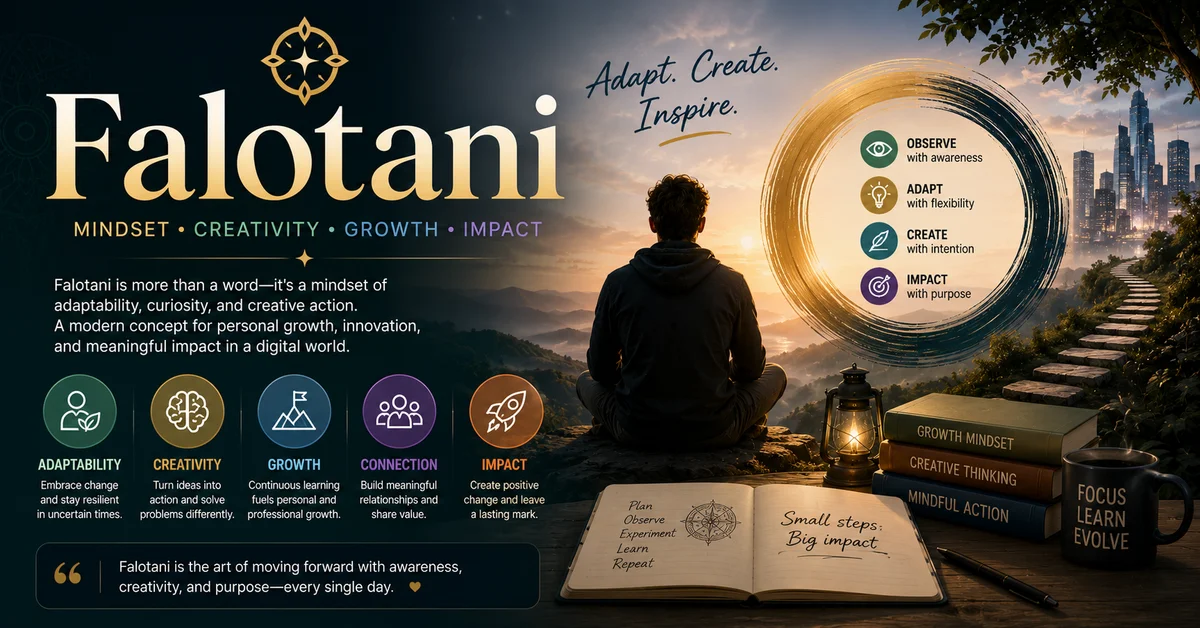
Falotani is best treated as a contemporary, multipurpose term — a modern neologism that people use to describe a flexible mindset, a creative method, or a brandable cultural concept. It doesn’t have one single, historically verified definition; rather, it operates as a fluid label people adapt to different contexts (personal growth, creativity, branding, or even fictionalized cultural practices). This flexibility is its strength: falotani works as a linguistic scaffold that invites interpretation and creative use.
Because falotani is rare and malleable, it functions very well in digital spaces where uniqueness matters. Emerging terms like this spread quickly on social media, niche blogs, and branding pages because they are easy to own — a brand, a coach, or an online community can make a distinct meaning stick. Linguistic research demonstrates that internet-driven neologisms often succeed for exactly these reasons: memorability, adaptability, and cultural fit.
Writers and creators use falotani to label multiple but related ideas: a mindset emphasizing adaptability, a creative or strategic framework for problem solving, and a brandable cultural identity in digital marketing. Some authors frame it as a lightly mythic or symbolic term tied to craft and attention; others treat it as a practical methodology for creative teams. The result is a modern concept meaning falotani that thrives on interpretation and use.
Origins and History of Falotani
Alleged historical background
Attempts to trace falotani to an ancient or traditional practice produce mixed results. Various web sources and niche posts suggest everything from invented folklore to hypothetical regional rituals, but there is no single authoritative historical record that confirms a long-standing cultural origin. That lack of consistent documentation supports the idea that falotani is best understood as a contemporary or repurposed term.
Myth vs. reality: tracing the roots
Online pieces sometimes craft origin-stories for falotani—stories that make it sound ancient and ceremonial. These retellings are compelling and useful for branding, but academically they read as speculative. The more reliable approach is to frame these tales as creative narratives that help communities relate to a concept, rather than as evidence of historical continuity. In short: treat origin stories as meaningful myth-making, not verified history.
Cultural interpretations and symbolism
When used metaphorically, falotani often evokes craftsmanship, quiet influence, and adaptive creativity. Writers who attach symbolic meaning give it poetic resonance: it becomes “the light in the shadow” for creators, or a compass for teams navigating ambiguity. These symbolic uses are valuable because they give the term emotional weight — an asset in storytelling and brand-building.
Falotani as a Mindset
Core principles of the falotani mindset
At its heart, the falotani mindset emphasizes adaptability, gentle curiosity, and iterative action. People who adopt it prioritize observation, small experiments, and learning-by-doing. The framework encourages openness to reframing problems, staying alert to subtle signals, and using creative constraints as fuel rather than obstacles.
Connection to creativity, adaptability, and problem-solving
Falotani aligns closely with established creativity techniques and adaptive decision models. It promotes flexible thinking and problem-solving approaches, blending elements from design-thinking, mindful decision-making, and agile practices. Practitioners adopt a “test-and-learn” posture: they try modest interventions, measure results, and refine strategies — a practical loop that supports consistent improvement.
Differences between falotani and other personal development frameworks
Compared to rigid frameworks that prescribe steps, falotani is intentionally amorphous. Where a traditional personal development program might define milestones and tools, falotani focuses on stance: being curious, remaining adaptive, and valuing craft. This makes it complementary to other frameworks — you can layer falotani over coaching methods, productivity systems, or team rituals to encourage creativity and resilience rather than replace them.
Practical Applications of Falotani
How to apply falotani in everyday life
Start small: pick a habitual decision or recurring problem and intentionally apply a falotani frame. Observe patterns, choose one variable to change, and treat the first attempt as data. For example: change when you check email, not how you process it — see what shifts in mood or output occur. Over time, these micro-experiments compound into clear improvements in focus and creative momentum.
Using falotani for personal growth
For personal development, falotani is a mindset tool that encourages self-directed experiments. It pairs well with mindful thinking techniques: set an intention, notice how you react, iterate. The framework is especially useful for writers, entrepreneurs, and creatives who benefit from porous structures — enough guidance to act, not so much that it stifles improvisation.
Falotani in decision-making and goal-setting
Use falotani to reframe goals as adaptable targets. Instead of locking into a 12-month plan that can’t account for change, define directional goals and key indicators you’ll respond to. This adaptive decision-making style preserves momentum while allowing course corrections based on new information — a hallmark of nimble, resilient teams.
Real-life examples and case studies
Case studies (real or hypothetical) of falotani practices show teams who prioritized small, iterative tweaks over large initiatives. Creative teams often report that a falotani approach reduced paralysis and increased sustainable output. Brands also use it: a small A/B test on messaging or packaging becomes the falotani moment that triggers a broader, data-led rebrand. Such examples highlight the framework’s practical value in both personal and organizational contexts.
Falotani in Digital Culture
How falotani is used in online trends and social media
Because falotani is brandable and unique, it appears in social feeds, microblogs, and creative portfolios as a distinguishing label. Creators coin personal definitions and communities gather around those interpretations. This decentralized adoption is typical of internet language evolution where Generation Z and platform-native communities accelerate neologism adoption. Research into digital neologisms shows that these trends often start in small communities before spreading more widely.
Role in branding and digital marketing
Marketers like falotani because it’s ownable: a unique keyword that’s easy to rank for and to trademark in brand narratives. When used thoughtfully, it becomes a storytelling device: a falotani brand is one that signals creativity, subtlety, and craftsmanship. However, its vagueness means brands must define and operationalize the term clearly to avoid confusion.
Falotani as a modern neologism and SEO-friendly term
From an SEO perspective, falotani is valuable because it’s low-competition and high-uniqueness. That makes it ideal for focused content strategies: define the term clearly on your pages, create authoritative content around related keywords, and anchor your site as the primary meaning-provider for search engines. As the word spreads, maintaining a consistent, high-quality definition helps a site claim authority.
Falotani in Creativity and Innovation
Using falotani to enhance creative thinking
Falotani encourages playful constraints and curiosity-driven experiments — two proven creativity boosters. Methods like timed freewriting, constrained composition, or rapid prototyping are perfectly compatible with a falotani approach. The point isn’t to invent new rules but to shift stance: treat constraints as prompts and a first draft as research.
Problem-solving and adaptive strategies inspired by falotani
When teams face ambiguous problems, falotani suggests short cycles: define a low-risk experiment, set an observation window, and interpret results with humility. This fosters adaptive strategies where learning trumps perfection. In high-uncertainty contexts, that speed of feedback becomes a competitive advantage.
Tools and methods to implement falotani effectively
Practical tools include simple journals, experiment trackers, design-thinking canvases, and team retrospectives. Use checklists for micro-experiments and document outcomes. Over time, this builds a repository of small wins and transferable learning — the bedrock of a falotani practice.
Misconceptions and Critiques
Common misunderstandings about falotani
A common misstep is treating falotani as a plug-and-play recipe. Because it’s intentionally loose, some people expect precise rules and become frustrated. Another misunderstanding is claiming an ancient pedigree without sources. While origin stories can be inspiring, conflating myth with evidence undermines credibility.
Debunking myths and clarifying ambiguous definitions
Be explicit: when you use falotani in formal content, label whether you’re offering a personal definition, a brand definition, or a cultural claim. This transparency preserves trust and aligns with E-A-T principles: show who is making the claim, why, and on what evidence.
Critiques from the perspective of psychology and cultural studies
Psychologists and cultural scholars might critique falotani for being overly vague or for the risk of cultural appropriation if framed as an “ancient practice” without verification. The responsible path is to clarify provenance and use the term with respect for existing cultures and scholarly standards. For broader context, studies of neologisms and internet-driven language change help explain how terms like falotani arise and circulate.
Future of Falotani
Predicted trends and relevance in personal development
Expect falotani to keep evolving as creators and coaches assign useful, specific meanings. In personal development, it’s likely to be adopted as a flexible stance — a lightweight method that people combine with verified techniques (mindfulness, cognitive reframing, agile habits). Its appeal will lie in its adaptability to different life stages and projects.
Role in digital evolution and cultural influence
In the digital sphere, falotani will likely remain a term invented and refined by creators. As the internet rewards the unique, localized meanings of such words can spread quickly, making early adopters key influencers. Continued research into language evolution suggests that the velocity of adoption depends heavily on platform dynamics and influencer networks.
Opportunities for growth and adoption
Organizations and creators who adopt falotani early have an opportunity to shape its definition. Thoughtful documentation, case studies, and open-source tools that operationalize the framework (e.g., experiment templates, journals, or micro-courses) will help transform falotani from a buzzword into a usable practice.
Summary
Falotani is a contemporary, flexible concept useful as a mindset, creative method, and brandable term. It thrives on interpretation and practice rather than historical verification. Its power comes from adaptability: it can scaffold experiments, shape brand identity, and boost creative momentum.
For individuals, falotani offers a permission slip to experiment and iterate. For the digital world, it demonstrates how language evolves — and how new, useful terms can be co-created by communities. Used responsibly, falotani helps people and teams move from stuckness to momentum.
If you’re curious, try one falotani experiment this week: pick a small constraint, run a modest test, and record what you learn. Over time, that practice will produce clarity, creativity, and confidence — the very outcomes the falotani ethos promises.
Frequently Asked Questions
What does falotani really mean?
There is no single universally accepted definition. In practice, falotani is a flexible term used to describe an adaptive mindset, a creative framework, or a brand identity. How it’s defined depends on who is using it and why.
Is falotani a real cultural practice?
Claims that falotani is an ancient or specific cultural practice are not consistently supported by scholarly evidence. Treat origin stories as creative narratives rather than historical fact unless authoritative sources are cited.
Can falotani improve personal growth and creativity?
Yes — when operationalized as a set of small experiments, mindful techniques, and adaptive decision models, falotani can boost creativity and growth. It works best when combined with proven tools (journaling, prototypes, design-thinking).
How is falotani relevant in digital marketing?
Falotani is highly relevant because it’s unique and brandable. When a brand clearly defines its falotani meaning and demonstrates it through content, products, or rituals, it can gain a distinct positioning online. For SEO, the word’s uniqueness makes it easy to own and rank for.
Stay in touch to get more updates & alerts on bytemag.tech! Thank you.