Vyxarind Qylorith: Exploring the Digital-Age Myth
Vyxarind Qylorith is a striking example of how stories evolve in the digital age — a symbolic construct that blends ancient folkloric resonance with futuristic imagery to form a living myth. It does not belong to a single tradition or culture; instead, it inhabits online spaces where creators remix archetypes and speculative motifs. This hybrid nature makes Vyxarind Qylorith a powerful example of digital mythology because it both borrows from and reshapes older narrative patterns while embracing modern technological contexts.
Its importance in digital culture lies in how it functions as a cultural anchor: communities use the name and associated images to coordinate creative projects, world-building, and philosophical explorations. The myth captivates modern audiences because it offers an enigmatic core — an invitation to participate. People don’t just consume Vyxarind Qylorith; they co-create its meanings through fan fiction, visual art, games, and speculative essays, which keep the myth dynamic and relevant.
Origins of Vyxarind Qylorith
Early traces of the concept appear in scattered online forums and digital storytelling sites, where speculative writers and experimental artists toyed with names and symbols that sounded both archaic and futuristic. Those early mentions functioned like seeds: brief posts, forum threads, and concept sketches that hinted at a larger mythology. Over time, these fragments knitted together as different creators borrowed and expanded the idea, a hallmark process in digital myth creation.
Speculative narrative origins are key to understanding its spread. Vyxarind Qylorith began not as a finished legend but as a framework — a flexible motif creators could graft onto characters, settings, or mechanics. Because of this, it evolved from a fictional construct into a digital myth through community iteration, much like how oral traditions shape and reshape tales. Each retelling contributed encrypted meanings and symbolic layers, making it richer and more adaptable.
The Mythic Symbolism of Vyxarind Qylorith
At its heart, the myth embodies transformation and mystery. Vyxarind Qylorith symbolizes processes of change — personal metamorphosis, cultural adaptation, and technological transition. This transformative theme resonates with audiences who live in rapidly shifting digital environments and who seek stories that reflect change rather than deny it. The myth’s mystery invites curiosity, encouraging readers to look for hidden truth and encoded significance in its fragments.
Symbolic archetypes in digital storytelling show up often within Vyxarind lore: guides who resemble sages, landscapes that fuse natural cycles with neon tech, and objects that act as keys to alternate dimensions. These archetypes—drawn from deep narrative wells—create familiar emotional hooks even while the myth’s surface details remain novel. The result is a compelling mix of comfort and wonder: mythic archetypes repackaged for an immersive virtual world.
Hidden Truths and Encrypted Meanings
One reason Vyxarind Qylorith sparks engagement is its sense of encrypted legacy. Creators intentionally layer symbols and half-fragile clues, producing a puzzle-like reading experience where audiences glean personal meanings. This approach mimics ancient mythic transmission — fragments preserved in inscriptions or oral bits — and translates that mystique into searchable, interactive fragments online.
These hidden layers function as an engine for collective imagination. Enthusiasts decode patterns, compare interpretations, and build shared glossaries. That collaborative deciphering becomes its own cultural ritual: each discovery and reinterpretation adds legitimacy and depth, escalating the myth’s perceived value as a living cultural artifact.
Vyxarind Qylorith in Fantasy World-Building
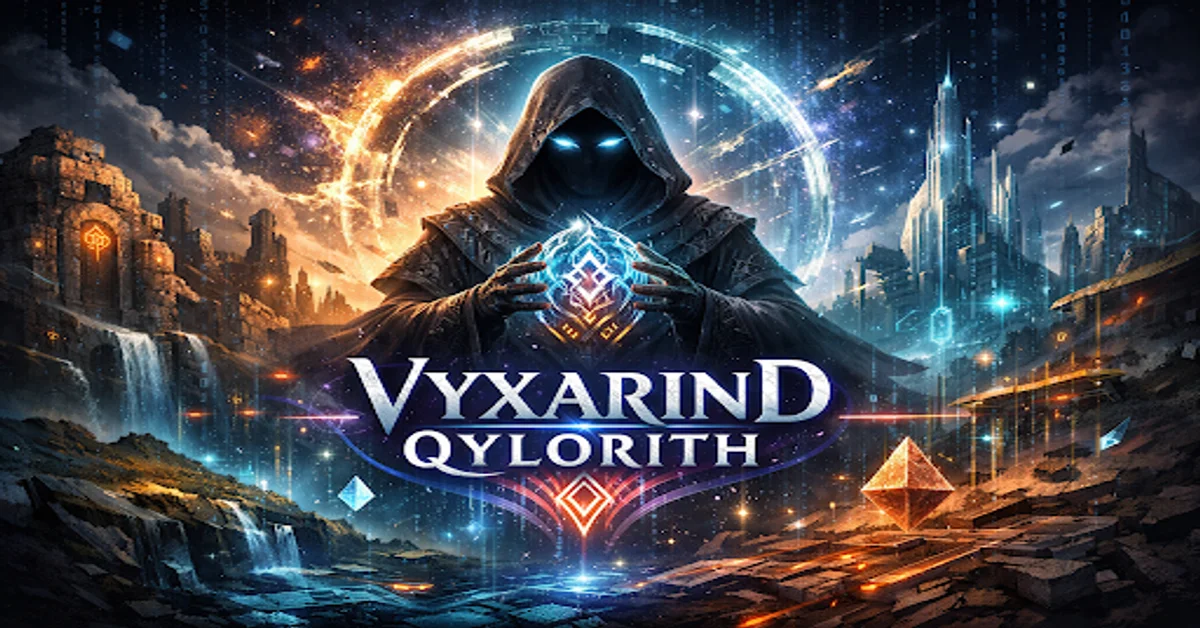
Vyxarind Qylorith is immensely useful for world-building because it provides a compact yet evocative mythic core. In literature, it might be the name of a lost archive or a cosmic force that reshapes destinies; in games, it can appear as lore that unlocks quests or influences mechanics. Virtual artists deploy its symbolic language to craft landscapes where ancient stone meets holographic glyphs — settings that feel both ancestral and cutting-edge.
Characters and narrative arcs built around Vyxarind often center on transformation: protagonists encountering the myth undergo inner shifts or gain access to hidden strata of reality. These narrative arcs benefit from familiar mythic scaffolding while allowing designers to experiment with futuristic motifs. Comparing Vyxarind with traditional mythological elements makes its power clear: like dragons or phoenixes, it acts as a seed for many stories, yet it remains deliberately open to reinterpretation so creators can adapt it to genre and platform.
Role in Literature, Gaming, and Virtual Art
Across mediums, Vyxarind Qylorith acts as both inspiration and scaffolding. In speculative fiction, authors use it to add symbolic gravity without anchoring the work to specific cultural histories; in fantasy game worlds, it becomes lore that players interact with and modify; on virtual art platforms, visual artists reimagine its motifs using generative art and mixed media. This cross-platform presence increases its cultural reach and ensures continuous reinvention.
Because it’s not tied to an origin narrative, the myth fits many voices and cultures. Creators embed Vyxarind elements into artifacts, maps, or rituals, and those elements function as cultural touchstones that strengthen immersive storytelling. The more varied the use, the more robust the myth becomes — a loop of creation and adoption that fuels long-term relevance.
Digital Folklore: Modern Myth-Making
Myths no longer require bards and scrolls to travel — they travel via shared posts, threads, and images. How myths evolve online is central to Vyxarind’s spread: small, repeatable motifs move quickly through the web, mutate in each retelling, and then re-aggregate in new combinations. This is a version of digital legend evolution where virality and participation are the engines of propagation.
Blogs, fan communities, and social media act like the new campfire. Fan fiction communities and social media myth circles test and spread variations; virtual art platforms visualize possibilities. Memes and viral storytelling become a form of modern folklore: short, iterative, and communal. Vyxarind thrives in this ecosystem because it invites remixing rather than canonization — a key trait of sustainable online myths.
The Power of Memes and Viral Storytelling
Memes compress complex symbolic systems into digestible, replicable packets. When Vyxarind Qylorith motifs are meme-ified — an emblem, a short cryptic phrase, or a distinctive character portrait — they gain reach and the chance to be reborn across cultures. Viral iterations often emphasize a single element (a line, a sigil) that captures the imagination and spreads quickly, drawing new participants into deeper lore.
This viral spread turns passive readers into active contributors. Fans add context, build narrative continuations, and layer local meanings, which transforms a meme into a micro-folklore node. Over time, these nodes stitch together into a broader mythscape.
Philosophical and Cultural Interpretations
People are drawn to myths because they help make sense of experience. Vyxarind Qylorith opens an avenue for exploring human fascination with mystery in a world increasingly governed by data and logic. The myth highlights an aesthetic and epistemic desire: to balance rational knowledge with wonder. Philosophers and cultural critics find it fertile ground to probe questions about meaning-making in digital societies.
The intersection of imagination, logic, and metaphysics becomes visible when creators use the myth to stage dilemmas that feel simultaneously speculative and intimate. Vyxarind compels readers to ask: what counts as truth in a world of simulated realities? Its cultural resonance is heightened by the participation of online communities that collectively negotiate meanings, forging a shared symbolic economy.
Influences and Intellectual Roots
Vyxarind Qylorith draws on long traditions of myth and archetype. Thinkers such as Joseph Campbell and Carl Jung help explain why archetypal motifs feel instantly familiar, while contemporary authors like Neil Gaiman and Ursula K. Le Guin demonstrate how mythic sensibilities can be retooled for modern fiction. Even the cosmic dread aesthetics of H. P. Lovecraft occasionally surface in darker Vyxarind narratives, though typically reframed to emphasize wonder rather than nihilism.
These influences act as lenses rather than blueprints: creators borrow principles (like the Hero’s Journey or Jungian archetypes) while applying them to digital mythology and cyber folklore. This fusion yields stories that feel both deeply rooted and freshly inventive.
Creative Applications and Virtual Identity
Artists, writers, and game designers use Vyxarind Qylorith to shape online personas and craft evocative narratives. A streamer might adopt Vyxarind as part of a virtual persona, or a novelist might center a series around its cryptic lore. In each case, the myth gives a recognizable symbolic language that signals depth and intentionality to audiences.
Beyond branding, the myth fosters conceptual creativity. Designers experiment with interactive mechanics, such as unlocking hidden layers of story through player choices or using augmented reality to reveal Vyxarind sigils in physical space. These creative applications demonstrate the myth’s utility as both a storytelling tool and a cultural catalyst.
Fostering Conceptual Innovation and Experimentation
Because Vyxarind is not prescriptive, it invites bold experimentation. Developers can integrate myth elements into procedural generation, artists can use generative systems to iterate sigils, and writers can blend genres without breaking plausibility. This freedom encourages cross-disciplinary innovation and invites contributors from diverse backgrounds to participate in mythmaking.
As a result, Vyxarind Qylorith often becomes a testbed for new narrative techniques and interactive features, accelerating the evolution of digital storytelling itself.
Encrypted Legacy and Hidden Layers
The myth’s encrypted legacy is central to its allure. Creators intentionally design symbols and fragmented texts that suggest more than they say, encouraging audiences to search for meaning. This encoded approach mirrors ancient mystery traditions and gives participation a reward structure: the more you explore, the more you discover.
Audiences interpret, expand, and sometimes contest these hidden layers, creating a living commentary that becomes part of the myth itself. The metaphor of alternate dimensions — worlds that coexist with our own — helps fans frame these discoveries as explorations rather than mere entertainment.
Comparison with Real-World Systems
Analysts often draw analogies between Vyxarind Qylorith and structured systems in daily life. For instance, a lift safety certificate is compared to myth validation through culture: both signal reliability and communal acceptance. Safety inspections resemble the process of narrative refinement, where community critique polishes a story. Legal approval parallels collective storytelling acceptance: once communities recognize a motif, it attains a quasi-institutional status.
These comparisons help ground the myth, making abstract creative processes more comprehensible by mapping them onto familiar procedures of certification, validation, and consensus.
Influence on Futuristic Culture
Vyxarind Qylorith plays a growing role as a cultural tool in futuristic storytelling and design. It helps designers and cultural architects conceive virtual identity myths and symbolic systems that lend coherence to immersive experiences. As designers experiment with mixed reality and identity layering, Vyxarind’s archetypes offer a reusable symbolic vocabulary.
Its impact lies not only in aesthetics but in how communities negotiate meaning, making it a model for how modern folklore can influence product narratives, educational tools, and even ethical discussions about virtual life.
The Cyber Enigma and Symbolic Archetypes
As a cyber enigma, Vyxarind Qylorith is intentionally elusive — that elusiveness is a feature, not a bug. Archetypal significance endures because humans resonate with story patterns like mentors, thresholds, and journeys. Vyxarind repurposes those archetypes in contexts that involve networked identities, algorithmic recommendation systems, and blurred boundaries between fiction and reality.
Its enduring allure derives from this duality: the myth is both an invitation to decode and a scaffold for meaning, giving participants a sense of agency as co-creators.
Summary
Vyxarind Qylorith demonstrates that myths are not relics but living instruments of culture. Its symbolic power, encrypted legacy, and cross-platform adaptability make it an ideal example of how digital mythology evolves. By blending archetypal depth with futuristic motifs, Vyxarind invites participation, fosters creative innovation, and provides a durable framework for virtual storytelling.
The myth endures because it answers a human need: to experience wonder, find communal meaning, and imagine alternate realities. In doing so, Vyxarind Qylorith becomes more than a concept — it becomes a cultural practice that shapes how we tell stories in the 21st century.
Frequently Asked Questions
What does Vyxarind Qylorith represent?
It represents the fusion of folklore and futuristic symbolism — a living digital myth that channels mythic archetypes into virtual storytelling.
Is it a real legend?
No: it’s a modern, community-driven myth rather than a historical legend tied to a specific culture.
Why is it considered a digital myth?
Because its evolution, transmission, and reinterpretation primarily occur in online forums, fan communities, and virtual art platforms.
How does it connect to culture and storytelling?
It acts as a flexible symbolic anchor for creators across literature, games, and digital art, helping to shape narratives and virtual identities.
What makes it unique among modern myths?
Its intentional openness and encrypted design invite broad participation — people can co-create its meanings rather than simply consuming a fixed story.
Stay in touch to get more updates & alerts on bytemag.tech! Thank you.